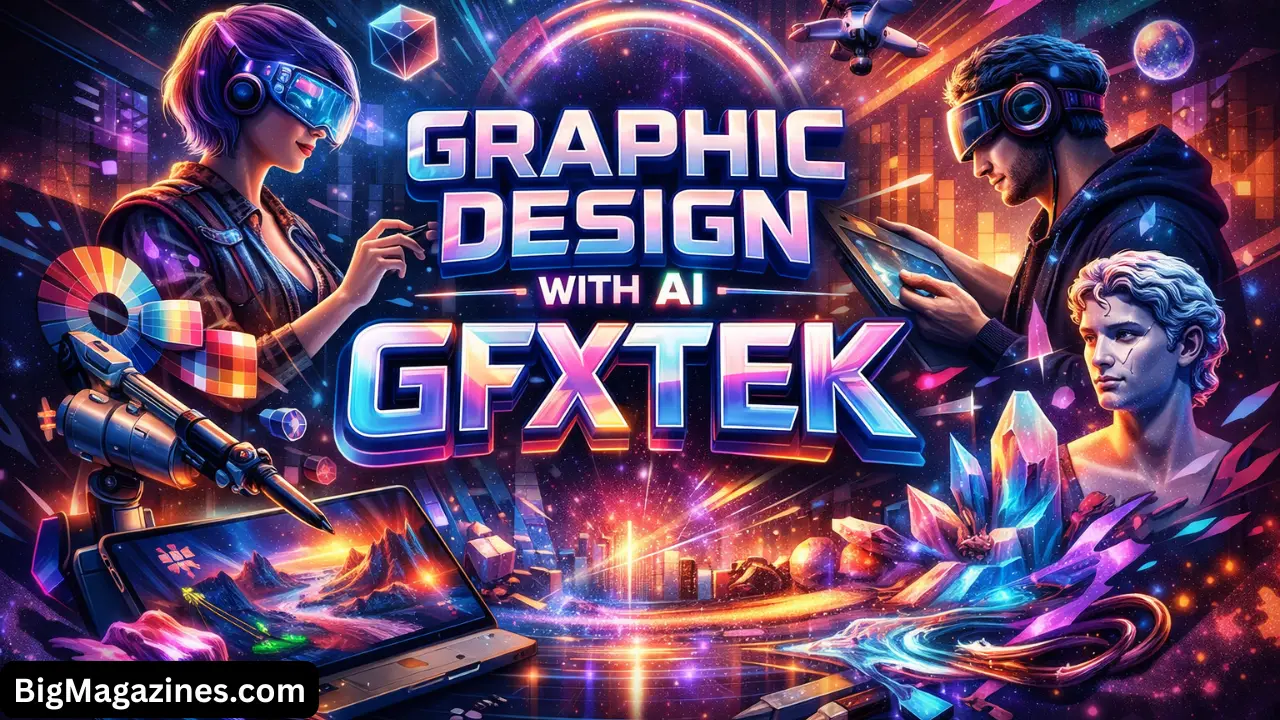
Welcome to the future of digital art. If you have been following the creative world lately, you have probably heard people talking about graphic design with ai gfxtek. It sounds like a complex technical term, but it is actually a very exciting way for artists and business owners to create stunning visuals faster than ever before.
In this guide, we are going to break down exactly what this means. We will look at how it helps you work smarter, the best tools to use this year, and how you can start using these methods today. Whether you are a professional designer or someone just starting out, understanding these new AI workflows will give you a huge advantage in 2026.
What is Graphic Design with AI GFXTEK?
When we talk about graphic design with ai gfxtek, we are describing a modern way of creating art that mixes human imagination with the power of artificial intelligence. In the past, “GFX” usually referred to visual effects—the shiny, glowing, or high-tech elements you see in video game posters or movie titles. Now, “GFXTEK” has become a shorthand for using advanced AI technology to handle the heavy lifting of these complex designs.
Think of it like having a very talented assistant who can draw anything you describe in seconds. Instead of spending five hours manually drawing every single shadow or light beam, you use AI to generate the base layers. Then, you use your human skills to polish the image and make it perfect. It is not about letting a machine do all the work; it is about a partnership where the machine provides the speed and the human provides the soul and the “vibe.”
In 2026, this method has become very popular because it allows for “imperfect” and “raw” styles that feel more human. While old AI art looked a bit too “perfect” or plastic, the GFXTEK approach focuses on adding textures, grit, and unique personality to every piece. It’s about making digital art feel like something you could almost touch.
“The most compelling work in 2026 uses AI to surface unexpected forms and textures, which are then refined through human judgment.” — Industry Insight
Key Differences in the GFXTEK Approach
| Feature | Traditional Graphic Design | Graphic Design with AI GFXTEK |
| Creation Time | Hours or Days | Minutes or Hours |
| Idea Generation | Manual sketching | Instant AI brainstorming |
| Texture & Detail | Hand-drawn/Stock photos | AI-generated custom textures |
| Flexibility | Hard to change later | Easy to swap elements with AI |
| Skill Focus | Tool mastery (Pentool, etc.) | Creative direction and prompting |
Why You Should Switch to GFXTEK Workflows
If you are still doing everything the old-fashioned way, you might be missing out on a lot of growth. The main reason to start using graphic design with ai gfxtek is the incredible boost in speed. In the fast-paced world of social media, being able to turn an idea into a finished post in minutes is like having a superpower. You no longer have to worry about “blank canvas syndrome” because the AI gives you a starting point immediately.
Another big reason is the quality of the results. AI can create lighting effects and 3D textures that are very difficult to do by hand. By using these high-end “GFX” techniques, your work will look much more professional and expensive to your clients. It also allows you to experiment with many different versions of a design. You can try ten different color schemes or five different layouts in the time it used to take to make just one.
Finally, the market is changing. In 2026, clients are specifically looking for designers who know how to use these tools. They want the efficiency that AI brings, but they still need your human “taste” to make sure the final result fits their brand. Switching to this workflow ensures you stay relevant and competitive.
Top Trending AI Graphic Design Tools in 2026
To get the best results with graphic design with ai gfxtek, you need the right toolkit. The industry has moved fast, and the tools we use today are much more precise than they were a few years ago. You no longer just get random images; you get files that you can actually edit and control.
One of the leaders is Adobe Firefly, which is built right into Photoshop. It allows you to use “Generative Fill” to add elements to your design just by typing what you want. Another favorite is Midjourney v7, which is famous for creating the most beautiful and artistic textures. If you need clean shapes and logos, Recraft has become the go-to for AI-powered vector art.
- Adobe Firefly: Best for editing photos and adding elements seamlessly.
- Midjourney: Best for high-concept art and “moody” lighting effects.
- Leonardo.ai: Great for consistent characters and unique 3D styles.
- Kittl AI: Perfect for posters and fast layout generation.
Step-by-Step: How to Master the GFXTEK Method
Learning graphic design with ai gfxtek is easier than you think if you follow a simple process. First, you start with “Prompt Engineering.” This just means learning how to describe your idea to the AI using clear words. You don’t just say “make a logo”; you say “minimalist logo with holographic textures and neon lighting.”
Next, you move to the generation phase. Instead of trying to make the whole design at once, experts recommend generating different pieces. For example, you might generate a cool background first, then a separate 3D character, and then a specific texture. This gives you more control over the final look.
The third step is “The GFXTEK Touch.” This is where you bring your AI pieces into a program like Photoshop or Canva. You use tools to clean up the edges, fix any weird AI mistakes, and add your own text. This “human-in-the-loop” step is what makes the design look professional and not just like a generic AI image. Finally, you use an AI upscaler to make the image very sharp and clear for printing or high-res screens.
Core Features of High-End AI Workflows
What makes graphic design with ai gfxtek different from just playing with an app? It is the focus on consistency and depth. In professional work, you need your brand to look the same across every platform. Modern AI workflows allow you to “lock in” a certain style or color palette so that every image you generate fits the same brand identity.
Another core feature is the use of Tactile Textures. In 2026, the trend is “Texture Check”—designs that look like you could reach out and touch them. Whether it is a “glassy” look, a “liquid metal” vibe, or “rough paper” feel, AI is incredibly good at creating these realistic materials.
Case Study: Scaling a Marketing Campaign
One small agency used GFXTEK methods to create a campaign for a travel app. Using traditional methods, creating 200 unique visuals would have taken months. By using AI to generate base “urban adventure” themes and then refining them manually, they finished the project in just two weeks and saved over 80% in design hours.
Frequently Asked Questions (FAQ)
Is graphic design with AI GFXTEK ethical?
Yes, as long as you use tools that respect copyright. Most professional tools in 2026 use training data that is legally sourced. The goal is to use AI as a tool for your own original ideas, not to copy others.
Do I need a powerful computer for this?
Surprisingly, no! Most of the heavy AI processing happens in the “cloud.” This means you can do high-end graphic design with ai gfxtek on a basic laptop as long as you have a good internet connection.
Will AI replace my job as a designer?
The short answer is no. AI cannot understand a client’s “heart” or the specific cultural context of a brand. It is a tool that replaces the boring, repetitive parts of the job, allowing you to spend more time on the creative “big ideas.”
The Future of Design in 2026 and Beyond
As we look forward, the world of graphic design with ai gfxtek is only going to get more immersive. We are seeing a move toward “Multimodal Experiences,” where designs aren’t just for screens but also for voice and touch. AI will soon help us create graphics that react to how a user is feeling or what environment they are in.
The biggest trend for the rest of 2026 is “Imperfect by Design.” People are getting tired of things that look too computer-generated. The next wave of design will focus on “happy accidents,” hand-drawn styles, and raw emotions that are enhanced by AI. By mastering these tools now, you are putting yourself at the front of this new creative revolution.
Conclusion: Stepping Into the Future of Design
In 2026, the world of graphic design with ai gfxtek is no longer a futuristic dream—it is the standard for anyone who wants to stay ahead. We have seen how blending human creativity with the raw speed of artificial intelligence allows for more experimentation, faster results, and higher-quality visuals. By moving away from manual, repetitive tasks, you free up your mind to focus on what really matters: the big idea and the emotional connection with your audience.
The journey into AI-assisted design is about growth and adaptation. Whether you are using Adobe Firefly for seamless edits or Midjourney for artistic textures, the “GFXTEK” approach ensures your work remains professional and full of personality. As the industry continues to evolve, those who embrace these tools as a partner rather than a replacement will lead the next wave of digital art. Start small, experiment often, and watch your creative boundaries disappear.
Also Read: Yinyleon Cause of Death Rumors