The world of parasites is often hidden from our daily lives, but some microscopic organisms carry a punch far heavier than their size suggests. One such condition, often searched for as ozdikenosis, is actually a serious medical disease known as Alveolar Echinococcosis (AE).
While the name might sound like something out of a science fiction movie, the reality of how this parasite interacts with the human body is very real. It is a slow-moving but relentless invader that primarily targets the liver, behaving more like a spreading tumor than a typical infection.
What is Ozdikenosis? (Understanding the Parasite)
When people ask why does ozdikenosis kill you, they are usually referring to a specific type of tapeworm infection. The scientific name for the culprit is Echinococcus multilocularis. This is a tiny parasite that usually lives its life cycle between foxes and small rodents like mice or voles. Humans are not actually supposed to be part of this cycle; we are what doctors call “accidental hosts.”
We catch this disease by accidentally swallowing the microscopic eggs of the tapeworm. This usually happens through contact with dirt, water, or even the fur of a pet that has been roaming in the wild. Once those eggs enter the human body, they don’t stay in the stomach. They hatch and travel through the bloodstream, eventually finding a home in the liver.
| Feature | Description |
| Common Name | Ozdikenosis / Alveolar Echinococcosis (AE) |
| Causative Agent | Echinococcus multilocularis (Tapeworm) |
| Primary Target | The Human Liver |
| Growth Type | Infiltrative (spreads like a cancer) |
What makes this condition so unique and dangerous is the way it grows. In most parasitic infections, the body can wall off the intruder in a simple sac or cyst. However, with ozdikenosis, the parasite creates a honeycomb-like structure of tiny vesicles. These vesicles push into healthy tissue, eating away at the organ bit by bit. This “tumor-like” behavior is exactly why it is considered one of the most dangerous parasitic diseases in the world.
The complexity of this organism is fascinating but frightening. Because it doesn’t trigger an immediate, massive immune response, it can hide inside a person for decades. It quietly builds its colony, slowly replacing healthy liver cells with parasitic tissue. By the time a person realizes something is wrong, the parasite has often established a firm grip on their internal systems.
Expert Quote: “Alveolar echinococcosis is often referred to as ‘parasitic cancer’ because of its ability to invade organs and spread to distant sites in the body, much like a malignant tumor.” — Medical Parasitology Journal
Why Does Ozdikenosis Kill You? The Disease Progression
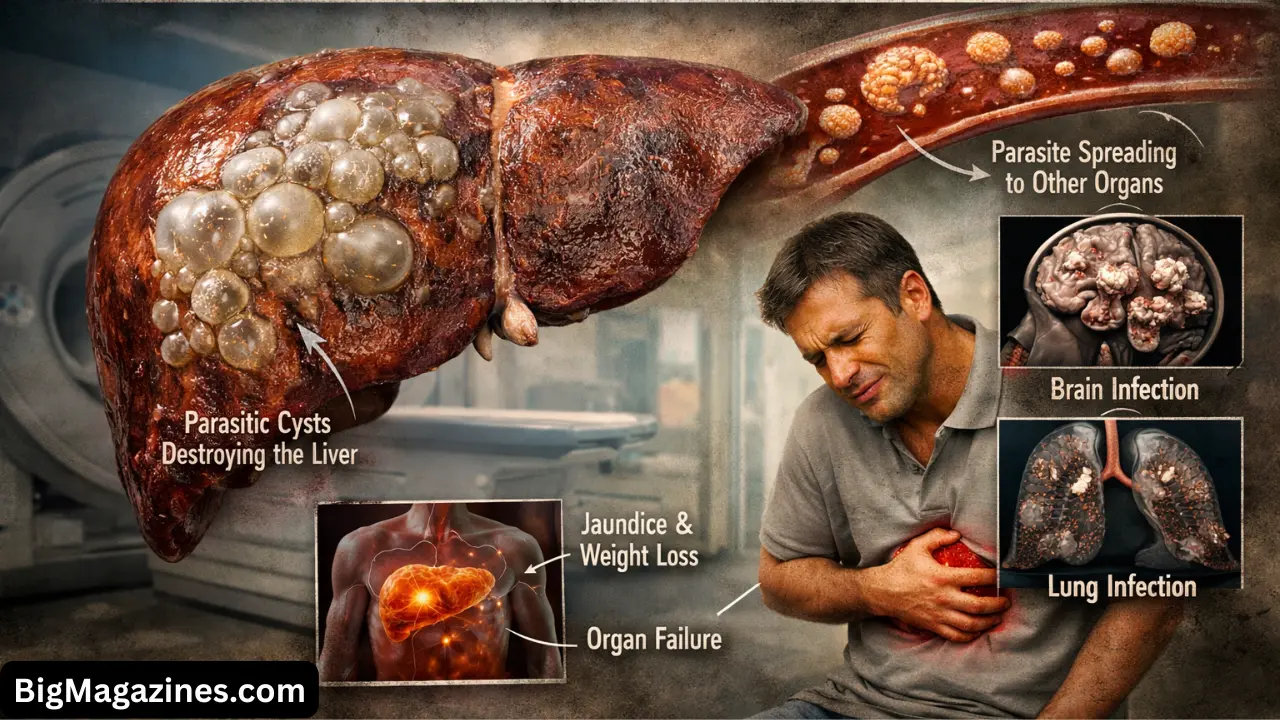
To understand why does ozdikenosis kill you, you have to look at how the parasite behaves once it settles into your liver. Unlike a normal infection that might cause a fever and then go away, this parasite acts like a “slow-motion” cancer. It creates a network of tiny, fluid-filled sacs that branch out and crawl into healthy tissue. This process is called infiltrative growth, and it is the primary reason the disease is so lethal if left untreated.
As the parasite grows, it physically replaces your liver cells. The liver is the body’s filter; it cleans your blood and helps you digest food. When the parasite takes over, the liver can no longer do its job. This leads to a total shutdown of the organ, which is a primary cause of death. Because the growth is so slow—often taking 10 to 15 years—the body doesn’t always realize it is under attack until the damage is already severe.
Another reason why does ozdikenosis kill you is because it can “metastasize.” Just like a malignant tumor, small pieces of the parasite can break off and travel through your blood. These pieces can land in your lungs or even your brain, starting new parasitic colonies. This widespread organ failure makes the condition incredibly difficult for the body to fight off on its own.
Top Symptoms: How Do You Know if You Have It?
One of the scariest parts of this condition is that you might feel perfectly fine for a decade. However, as the parasitic mass gets bigger, your body will start to send out distress signals. Usually, the first sign is a dull ache or pressure in the upper right side of your belly where your liver is located. You might also feel more tired than usual or lose weight without trying.
As the disease progresses, more serious symptoms appear. Many people develop jaundice, which is when your skin and the whites of your eyes turn yellow because your liver is failing to process toxins. You might also notice that your skin feels very itchy or that your urine is dark in color. These are all signs that the parasite is blocking the bile ducts in your liver.
Common Symptoms of Alveolar Echinococcosis:
- Persistent abdominal pain (specifically in the upper right quadrant).
- Yellowing of the skin and eyes (Jaundice).
- Unexplained weight loss and loss of appetite.
- General weakness and chronic fatigue.
- Hepatomegaly, which is a medical term for an enlarged liver that a doctor can feel during an exam.
Why is Alveolar Echinococcosis So Hard to Treat?
The treatment for ozdikenosis is complicated because of the way the parasite weaves itself into your organs. In many other parasitic infections, a doctor can simply give you a pill to kill the worm. But with Alveolar Echinococcosis, the parasite has become a part of your liver tissue. Killing the parasite often requires removing the infected part of the liver through major surgery.
If the parasite has grown too large or has spread to other organs, surgery might not even be possible. In these cases, patients often have to take strong antiparasitic medications, like Albendazole, for many years or even for the rest of their lives. These drugs don’t always kill the parasite completely; instead, they “freeze” it to stop it from growing further.
| Treatment Type | Goal | When it is used |
| Radical Surgery | Remove the entire mass | Used when the parasite is in one spot. |
| Chemotherapy | Stop growth | Used for long-term management of the infection. |
| Liver Transplant | Replace the organ | A last-resort option for total liver failure. |
Who is at Risk? Understanding Exposure
You might wonder how someone even catches this. The risk comes from being in close contact with the “wild” cycle of the parasite. This tapeworm usually lives in foxes, coyotes, and wolves. The eggs are passed in their waste and can survive in the soil or on plants for a long time. People who spend a lot of time outdoors or handle animals are at the highest risk.
Farmers, hunters, and gardeners are often the ones who accidentally swallow the microscopic eggs. You can’t see them, and they don’t have a smell or taste. Sometimes, domestic dogs or cats can catch the parasite if they eat an infected mouse or vole. If that pet then licks a human or sleeps in their bed, the eggs can transfer to the person, leading to the infection known as ozdikenosis.
Diagnosis: How Doctors Find the “Hidden” Killer
Because the symptoms are so vague, doctors often find this disease by accident while looking for something else. A patient might get an ultrasound or a CT scan for a stomach ache, and the doctor will see a “shadow” on the liver that looks like a tumor. Because it looks so much like cancer, it takes specialized testing to realize it is actually a parasite.
Doctors use blood tests to look for specific “antibodies” that your body creates to fight the Echinococcus parasite. They might also use an MRI to get a very detailed picture of how far the parasite has branched out into the blood vessels. This “detective work” is vital because treating a parasite is very different from treating a typical cancer.
Prevention: How to Stay Safe from Ozdikenosis
The good news is that while ozdikenosis is dangerous, it is also preventable. Since the eggs are swallowed, the best defense is simple hygiene. If you are someone who loves to forage for wild berries or mushrooms, you must wash them thoroughly. Even better, cooking wild produce will kill any parasite eggs that might be clinging to the surface.
If you live in an area where foxes or coyotes are common, you should be careful about letting your dogs roam free. Many veterinarians recommend regular deworming for pets that live in high-risk rural areas. Washing your hands after gardening or touching soil is one of the most effective ways to make sure those tiny eggs never enter your system.
Prevention Checklist:
- Wash your hands after playing with pets or working in the dirt.
- Cook wild-picked food or wash it very carefully with clean water.
- Deworm your pets regularly, especially if they catch rodents.
- Avoid touching wild animals like foxes, even if they seem friendly or are deceased.
Conclusion: Can You Survive Ozdikenosis?
So, why does ozdikenosis kill you? It kills because it is a silent, invasive force that destroys the liver and spreads to other vital organs before most people even know they are sick. It is a serious diagnosis that requires immediate and long-term medical care. However, with modern medicine, the outlook is much better than it used to be.
If the disease is caught early, surgery can often remove the parasite entirely. Even in advanced cases, long-term medication allows many people to live full, normal lives. The key is awareness. By understanding how this parasite works and taking simple steps to stay clean and safe, you can protect yourself and your family from this hidden threat.
Also Read: tjfkratz